AI Doesn’t Create Slop. Humans Do.
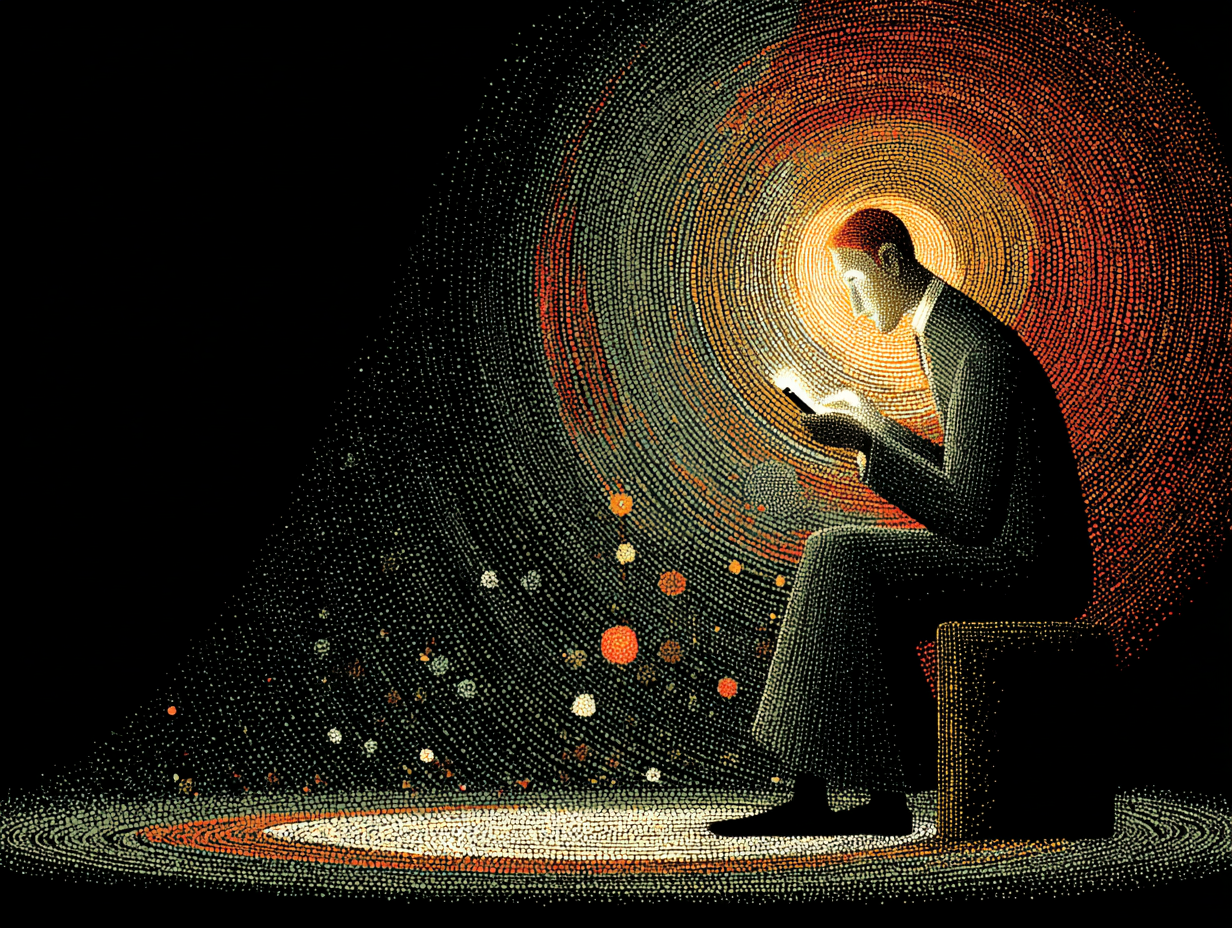
The intellectual highlight of my last week was a video by Ryo Lu, the head of design at Cursor. In it, Lu walks us through ryOS, his personal operating system built like a toy, powered by AI, and humming with the spirit of 1990s Mac software. You half expect to hear a "hello" startup chime.
He says, “I just spend hours coding and obsessing over every little detail, building this with one or two prompts mostly.” A sort of improvisational dance with machine intelligence. Lu isn’t just showing off “Baby Cursor.” He’s showing us what creativity looks like in an era where the machine isn’t an obstacle to originality but a co-conspirator. He doesn’t talk about productivity. He talks about soul. Watching him feels like watching a painter hold a new kind of brush. It should. AI is a new kind of brush. But it can only move to the rhythm and consciousness the painter invokes on the canvas.
The internet is groaning under the weight of generated junk: spammy e-books, uncanny portraits, planets being cut open, “is it cake” videos, and looping animations that reek of laziness. The thing that triggers me: “everything is regurgitated shadcn/ui junk.” We blame the models. “AI slop,” we call it, like some unavoidable sludge spilling from the pipes of progress. But we’re focusing on the wrong thing.
It’s not what AI is producing. It’s what we’re doing with it, and what that tells us about skills overall.
This Has All Happened Before
We’ve always been suspicious of our tools. Socrates warned that writing would weaken memory and disconnect thought from knowledge. This is why in the olden days, everyone memorized everything. Erasmus saw the printing press as an engine of low-quality distraction. A few centuries later, critics complained that the proliferation of typewriters and newspapers would destroy language altogether.
Every medium begins with a flood: cheap pamphlets, penny presses, desktop publishing software, blogs, podcasts, YouTube channels. First comes abundance. Then panic. Then a slow, stumbling maturation. And through it all, we look for someone to blame.
The tools are rarely to blame.
When we invented the camera, we did not mourn the end of painting. We eventually got Cartier-Bresson. When we taught machines to draw, we did not lose the human voice. We got Hayao Miyazaki. And when we created Photoshop, we did not end photography. We entered a new golden age of it.
The arrival of AI is no different in kind. Only in scale. It is faster, more promiscuous, capable of swallowing styles, references, idioms, and spitting out passable replicas in seconds. But just because something is easy to produce does not mean it has to be disposable.
The early slop isn’t a sign that the medium is broken. It’s a sign that we haven’t yet learned how to use it well. There is a lot of garbage out there, yes, without a doubt. But there is equally magic being created.
The Input Problem
What we’re witnessing now is not a technological failure. It’s a cultural failure. Slop is not an output problem. It’s an input problem.
The average user types a vague prompt, hits enter, and expects brilliance. What comes back is technically coherent, maybe even impressive by 2018 standards, but emotionally inert. It reads like someone trying to win a writing contest judged by an algorithm. Which, in a way, it is. The problem is not that AI is incapable of depth. The problem is that depth requires direction. And direction requires taste.
Taste isn’t an egotist pretending to know better. It’s strategic thinking. It requires knowing what good looks like, and what good feels like. It’s a voice. It means having the patience to say: not quite, try again. But not in a vague “I give back control to the AI” way. It’s about strategically manipulating the weights of the model in the context of the problem being solved. It means refining the prompt, choosing the right model, tweaking the context, critiquing what comes out with a native understanding of the stochastic pattern. It means using the machine not as an oracle, but as an author.
Most people simply lack the skill. A fundamental systems understanding. So they blame the model.
But AI doesn’t choose its goals. People do. AI doesn’t spam the internet. People do. AI doesn’t optimize for engagement. Platforms do. What we call slop is not an inherent property of machine intelligence. It’s the byproduct of how we deploy it, train it, and reward it.
Even the worst examples of AI output—those uncanny mashups of generic copy and corporate tone—tell us something. They reflect the culture they’re trained on. When the average blog post is indistinguishable from a press release, is it any wonder the models start to sound like interns at a PR agency?
The models are echo chambers. We fill them with equal amounts of internet garbage and magic. And then we complain about the echo.
Calibration as Craft
There is a skill that separates slop from substance. It’s not creativity in the traditional sense, though that helps. It’s calibration.
Calibration is what Ryo Lu does when he tweaks a system prompt for the fiftieth time. It’s what a scientist does when tuning an AI model to suggest viable molecules instead of molecular nonsense. It’s what happens when someone sits down not to ask AI for answers but to shape its questions more precisely.
Most people don’t realize how much work this takes. They assume the machine will intuit what they mean—that it will close the gap between intent and articulation on its own. But that gap is where the art lives. And right now, very few people are willing to live there.
AI responds to instructions, context, weighting, temperature, recursion. It is not just software. It is a probabilistic engine waiting to be steered. But like a violin, it does not make music unless someone knows how to pull the bow.
Lu understands this intuitively. When something doesn’t feel right, he asks again. He layers prompts. He sets constraints. He overrides defaults. The models give him structure, not substance. The substance comes from him.
This is the quiet truth about AI creativity. The best outputs are not the result of clever hacks. They are the result of discipline. Of curiosity. Of people who are willing to sit with the mess and shape something better out of it.
The Mirror, Not the Monster
What makes the “AI slop” narrative so sticky isn’t just the volume of mediocre content. It’s the comfort it provides. Blaming AI feels clean. It spares us from confronting the reality that we, not the machine, have lowered the bar. We treat the model like a rogue actor rather than what it is: a mirror.
But what we’re seeing online is not a machine problem. It’s a culture problem. The incentives are all pointing the wrong way. Ad-driven platforms reward engagement over insight. Speed is valued more than originality. And in a world of infinite scroll, even the most forgettable content finds an audience. Slop, in this system, isn't just tolerated. It’s optimized.
That’s why it spreads so fast. Not because AI wants it to, but because we’ve trained the digital economy to favor it.
And yet, there’s something dangerous about how quickly we’ve reached for fatalism. We talk about generative content the way people once talked about reality TV: as a sign of cultural decay, as if the rise of junk implies the death of craft. But every new medium begins like this. The flood comes first. Then the filters.
The question is not whether AI is capable of producing greatness. The question is whether we are willing to demand it.
This Too Has a Precedent
We’ve seen this story before.
The printing press flooded Europe with more than 20 million books within 50 years of Gutenberg’s invention. Much of it was religious polemic, bad poetry, pirated manuscripts, and moral panic. Erasmus, who initially welcomed the technology, later lamented that “to become a printer is easier than to become a baker.” But in time, from that mess emerged the Enlightenment.
When desktop publishing first arrived, it produced a thousand ransom-note newsletters. The fonts clashed. The layouts screamed. The aesthetic damage was real. But it also taught a generation of amateurs to think like designers. And from those early experiments came new canons of taste.
YouTube was once overrun by jump cuts, thumbnails with red circles, and cats playing piano. Today, it's home to documentaries more intricate than anything cable TV ever produced. It took a decade, but the signal eventually found its way through the noise.
AI is not exempt from this pattern. The difference is velocity. The bad is arriving faster than before. But so will the good, if we let it. If we choose to treat the tools not as vending machines but as instruments. If we demand more of ourselves, not less.
There is no technology immune to slop. Only cultures that learn to transcend it.
The Future, Curated
What AI needs now is not better prompts or more data. It needs stewardship.
This moment is not about whether machines can generate beauty or truth. We already know they can. The real question is whether we’re willing to slow down enough to make it happen. To learn how to speak clearly to the machine. To teach it what we value. To care not just about what it can do, but what we choose to ask of it.
The flood has arrived. That much is certain. But the future will not be built by those who retreat from it. It will be built by those who learn to filter, refine, and insist on craft. Those who treat AI not as a shortcut but as an extension of judgment. Who understand that even the most advanced model is still waiting—quietly, obediently—for someone to take responsibility.
In the end, it isn’t the machine that decides what clutters the internet. It’s us.